

5 Reasons Why a Car Might Have a Salvage Title
Why Car Might Have a Salvage Title
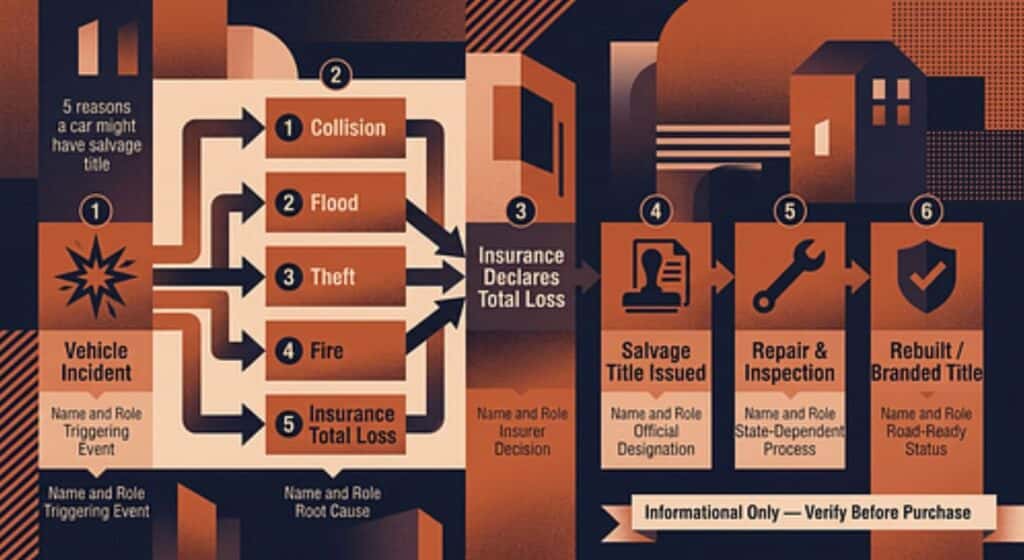
A car may receive a salvage title due to major accident damage, flood or weather events, theft recovery, fire damage, or insurance total loss decisions. A salvage title does not always mean a vehicle is unusable—it simply indicates the cost to repair once exceeded a certain percentage of its value. This guide is for informational purposes only.
*This article is for informational purposes only. Vehicle history, damage severity, and repair quality vary. Always verify details with a licensed dealership and review official vehicle reports before making any purchase decision.
What Does a Salvage Title Mean?
A salvage title is issued when an insurance company determines a vehicle is a total loss, typically because repair costs exceed a large portion of the car’s value (often 60%–80%, depending on the state).
Once repaired and inspected, some of these vehicles may return to the road under different classifications depending on state regulations.
1. Major Collision or Accident Damage
One of the most common reasons a vehicle receives a salvage title is due to a serious accident.
- Structural damage to the frame
- Airbag deployment
- Extensive body or mechanical repairs
Even if the vehicle is repairable, insurance companies may declare it a total loss due to cost thresholds.
2. Flood or Severe Weather Damage
Natural disasters are another major factor.
- Flooding can damage electrical systems, interiors, and engines
- Hurricanes, hailstorms, or heavy snow can cause widespread vehicle damage
Vehicles affected by water damage are often labeled salvage due to the risk of long-term issues.
3. Theft Recovery
A vehicle may receive a salvage title even if it wasn’t heavily damaged.
- If a stolen vehicle is not recovered quickly, insurance may pay out the claim
- When the vehicle is later found, it may be issued a salvage title
In some cases, these vehicles may have minimal or no damage.
4. Fire Damage
Fire-related incidents can also result in a salvage title.
- Engine fires or electrical fires
- Interior damage from smoke or flames
Even partial fire damage can lead to a total loss designation due to repair complexity.
5. Insurance Total Loss Determination
Sometimes, the decision is purely financial.
- Repair costs exceed the vehicle’s market value
- Labor and parts pricing make repairs uneconomical
- Insurance companies choose payout over repair
This means a car might still be repairable but is classified as salvage due to cost—not condition alone.
Why This Matters in Local Markets
Across the United States, including growing metro areas and surrounding communities, more buyers are researching salvage title vehicles due to:
- Rising used car prices
- Limited inventory availability
- Increased demand for affordable transportation
Understanding why a vehicle has a salvage title helps buyers make smarter, more informed decisions in their local market.
FAQ
Is every salvage title car badly damaged?
No. Some vehicles receive salvage titles due to theft recovery or insurance decisions rather than severe damage.
Can a salvage title car be repaired and driven?
Yes, depending on state laws, vehicles can be repaired, inspected, and returned to the road.
Why do insurance companies total vehicles so easily?
Because repair costs, labor, and parts can quickly exceed the vehicle’s market value.
Should I consider buying a salvage title vehicle?
It depends on your budget, goals, and willingness to verify the vehicle’s history and condition.
A salvage title simply tells part of a vehicle’s story—it does not automatically define its current condition or value. Understanding the why behind the title is key to making an informed decision.
*Again, this content is for informational purposes only. Always consult a trusted dealership and review all vehicle documentation before purchasing.






0 comment(s) so far on 5 Reasons Why a Car Might Have a Salvage Title