

What Happens After a Vehicle Receives a Salvage Title?
What Happens After a Vehicle Receives a Salvage Title?
Every vehicle has a story. Some vehicles spend years with one owner and receive routine maintenance, while others experience events that become part of their permanent history. One example is when a vehicle receives a salvage title.
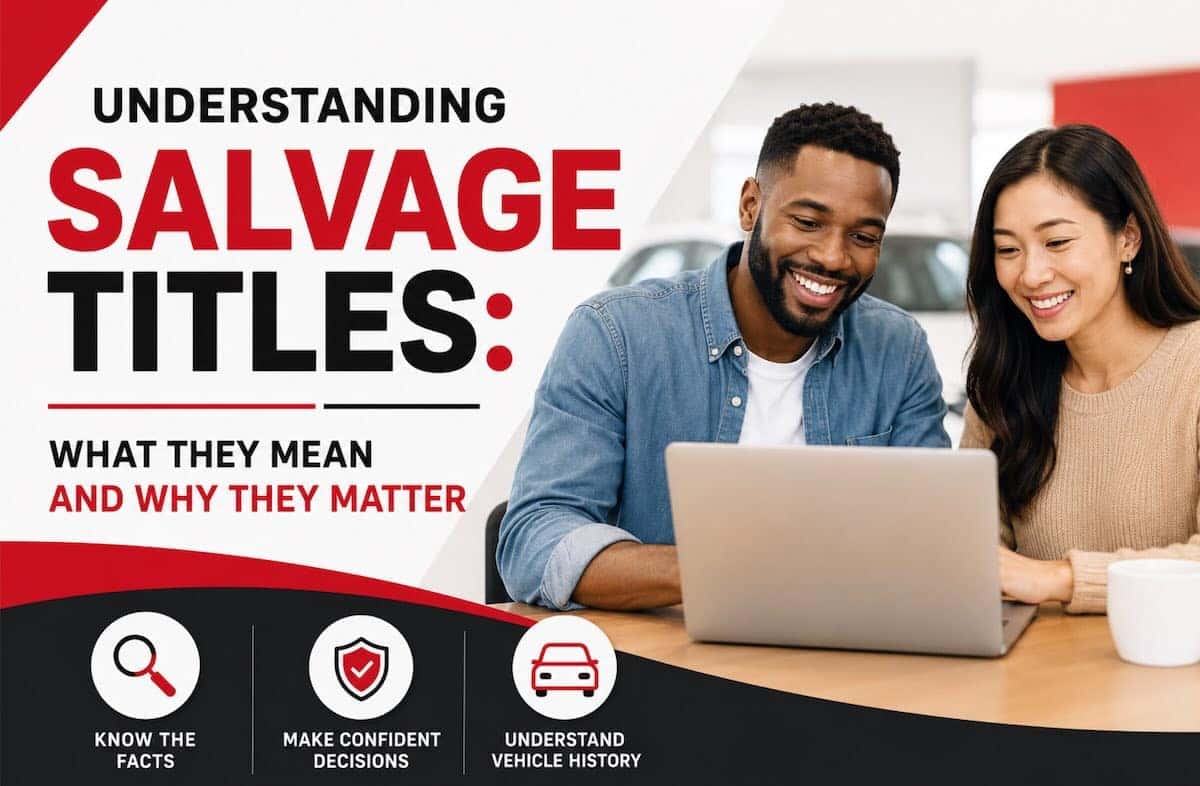
For many shoppers, the term “salvage title” raises questions. What happens next? Can the vehicle be repaired? Does every state follow the same process?
The answers depend on several factors, including the state where the vehicle is titled and the circumstances surrounding the vehicle’s history. Understanding the general process helps buyers become more informed and gives valuable context when researching used vehicles.
Why Vehicles Receive a Salvage Title
A salvage title is used by a state motor vehicle agency to identify that a vehicle experienced an event meeting that state’s requirements for a salvage designation.
The exact criteria vary from state to state, but the purpose remains consistent: preserving important historical information as part of the vehicle’s title record.
Rather than viewing a salvage title as the entire story, buyers should recognize it as one chapter in the vehicle’s overall history.
Every State Has Different Requirements
States establish their own title branding laws.
As a result:
- Damage thresholds vary.
- Reporting requirements differ.
- Inspection procedures differ.
- Title terminology may differ.
Understanding the issuing state’s requirements provides important context when reviewing any vehicle history.
The Vehicle’s History Continues
Receiving a salvage title does not end a vehicle’s history.
Instead, it becomes part of the permanent record while the vehicle’s ownership and documentation continue to evolve.
Documentation Becomes Important
As a vehicle moves through its history, documentation may include:
- Ownership records
- Service records
- Vehicle history reports
- Inspection records
- Maintenance history
- Mileage documentation
These records help provide additional context beyond the title itself.
Vehicle History Reports Add Perspective
Vehicle history reports often combine information from multiple sources to help buyers understand:
- Previous ownership
- Registration history
- Reported incidents
- Mileage records
- Service activity
- Title history
Looking at the complete record provides a more comprehensive understanding than relying on a single piece of information.
Understanding the Difference Between Salvage and Rebuilt
Many shoppers confuse salvage and rebuilt titles, but they generally represent different stages within a vehicle’s history.
A salvage title documents a qualifying event according to state requirements.
A rebuilt title, where applicable, generally indicates that additional state requirements have been completed before a new title designation is issued.
Because each state follows its own procedures, buyers should review the specific documentation associated with the vehicle.
Why Buyers Should Look Beyond the Title
One of the most common misconceptions is that a title alone tells everything about a vehicle.
In reality, buyers benefit from considering several sources of information together.
Maintenance History
Routine maintenance helps tell the story of how a vehicle has been cared for over time.
Service Records
Service documentation can provide valuable insight into repairs, inspections, and scheduled maintenance.
Ownership History
Previous ownership may offer additional context regarding how a vehicle has been used.
Vehicle Condition
Current condition remains an important consideration when researching any used vehicle.
Looking at all available information helps buyers make informed comparisons.
Transparency Helps Everyone
Vehicle title branding exists to support transparency.
When shoppers understand title terminology, they can ask better questions, review documentation more effectively, and better understand a vehicle’s history.
Instead of relying on assumptions, informed buyers can evaluate the complete picture.
Knowledge leads to greater confidence throughout the buying process.
Questions Buyers Can Ask
Learning about title history helps buyers ask more meaningful questions.
Examples include:
- Which state issued the title?
- What documentation is available?
- Is maintenance history available?
- Are inspection records available?
- What vehicle history reports are available?
- Has the title changed over time?
These questions often provide valuable context during vehicle research.
Why Education Matters
The used vehicle marketplace includes vehicles with many different histories.
Understanding how title branding works allows buyers to evaluate information objectively and make informed decisions.
Education helps remove uncertainty and encourages buyers to focus on facts, documentation, and available records.
The more shoppers understand about vehicle titles and history, the more confident they can become throughout their research.
Frequently Asked Questions
What happens after a vehicle receives a salvage title?
The next steps depend on the state’s requirements and the vehicle’s circumstances. Documentation, inspections, and future title status vary by state.
Is a salvage title permanent?
Title branding and terminology vary by state. Buyers should review the applicable state title records for each vehicle.
Is a salvage title the same as a rebuilt title?
No. They generally represent different title designations and may reflect different stages in a vehicle’s documented history.
Why should buyers review vehicle history?
Vehicle history helps provide additional context by combining title information with maintenance records, ownership history, mileage records, inspections, and other available documentation.
Continue exploring AutoSavvy’s Learning Center to better understand branded, salvage, and rebuilt titles so you can research vehicles with confidence.
Disclaimer
This article is provided for educational purposes only. Vehicle title laws, terminology, reporting requirements, and inspection processes vary by state. Always review the applicable state regulations and available vehicle documentation when researching a specific vehicle.







0 comment(s) so far on What Happens After a Vehicle Receives a Salvage Title?